
Category: Industry & Science · Recommended read time: 5 min
Featured Reading
This commentary builds on reporting by Nate Berg for Fast Company, "Why the car dealership of the future looks like a midcentury modern living room" (2021).
For nearly a century, the architecture of the car dealership has signaled one thing above all: pressure. Glass walls, marble floors, salespeople positioned between the customer and the product. The space itself was a transaction. You did not wander in, you committed to walking in.
That model is quietly being dismantled. And the most instructive example is not coming from a legacy automaker. It is coming from a startup that recognized something the industry forgot: the showroom is not where you sell a car. It is where you build the relationship that eventually leads to one.
What Lucid Motors Actually Built
As Fast Company's Nate Berg reported, Lucid Motors, the Silicon Valley luxury EV maker, partnered with Los Angeles architecture firm Marmol Radziner to design a new generation of retail spaces. The brief was deceptively simple: do not build a dealership. Build a midcentury modern living room.
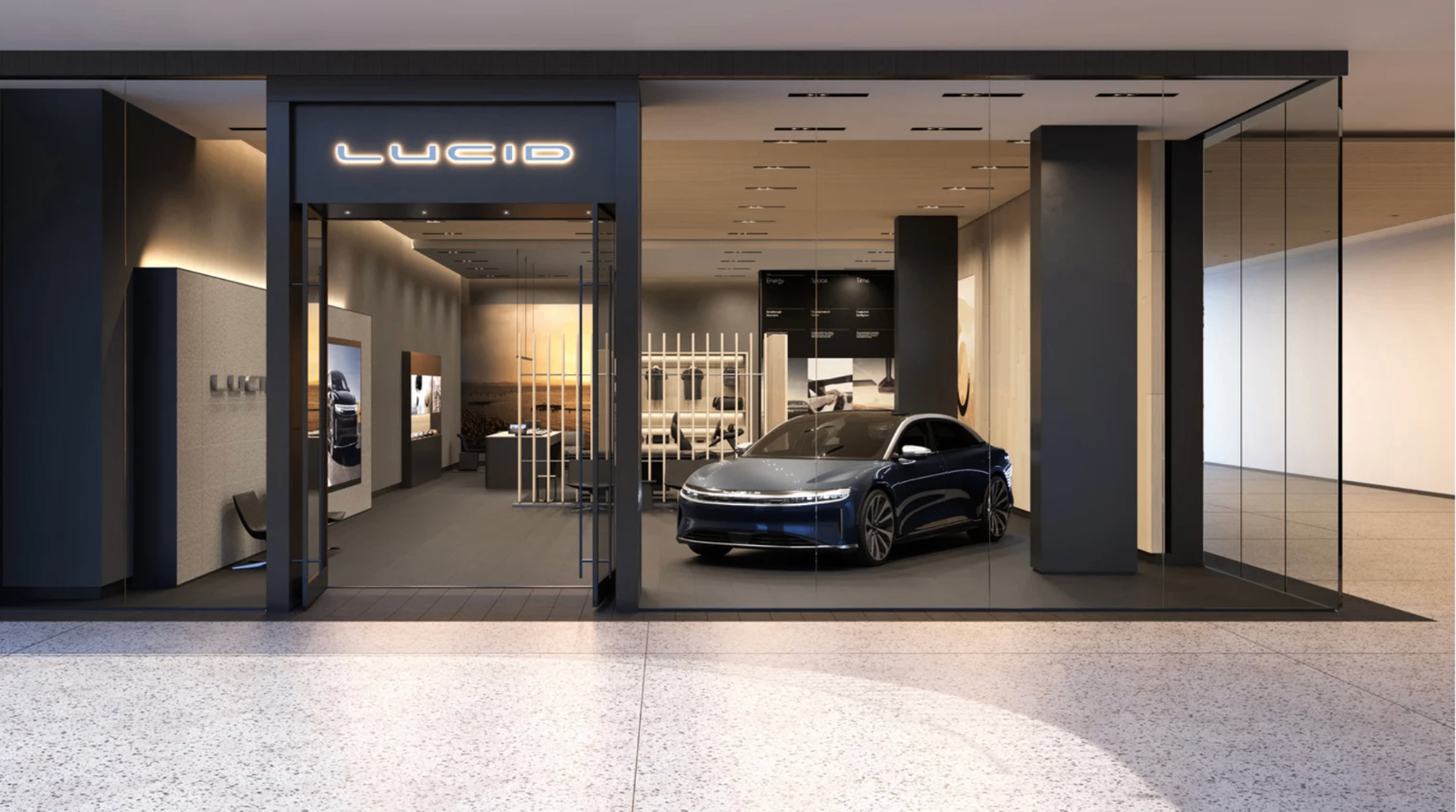
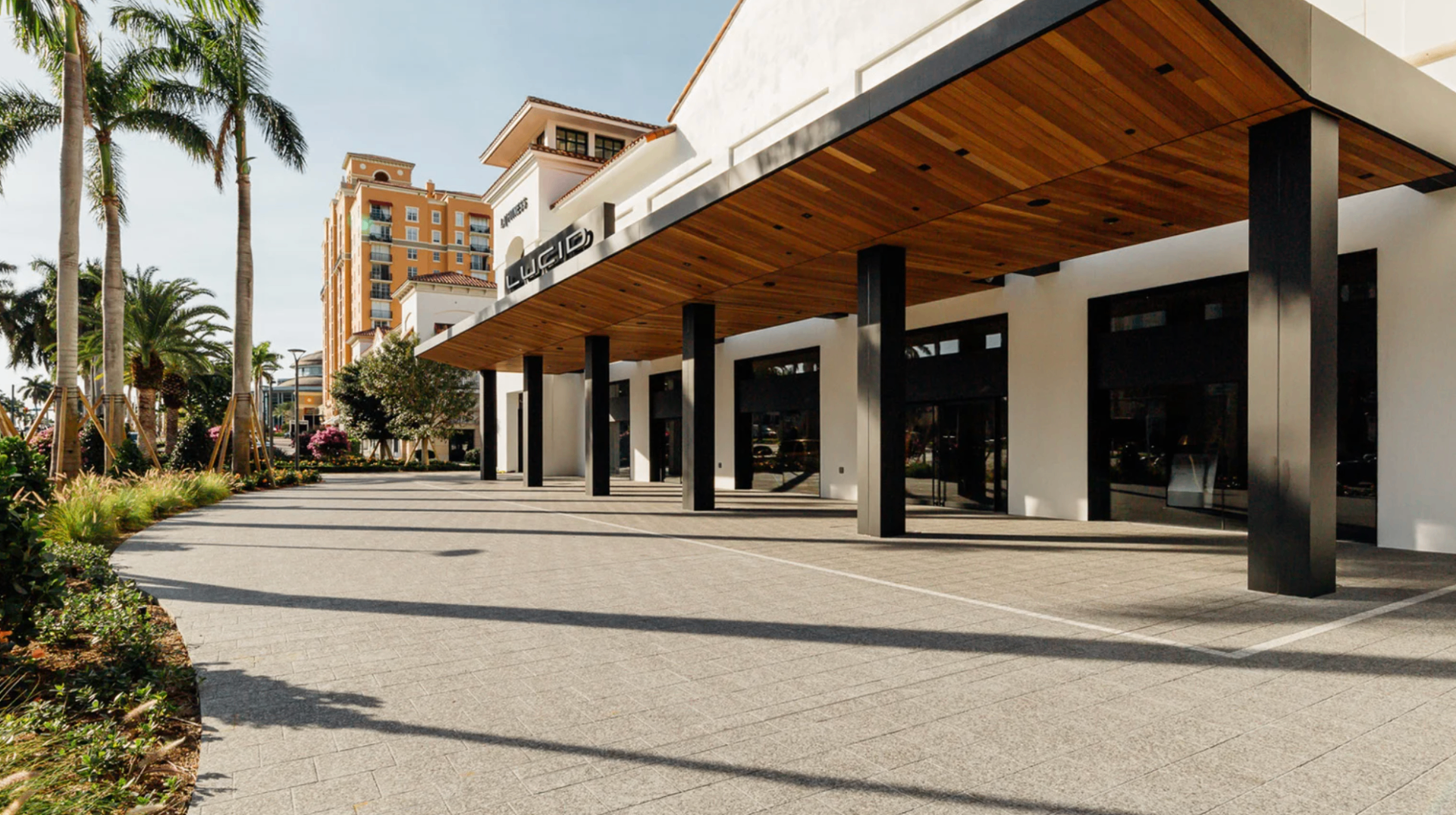
The result, opened in locations including L.A.'s Century City and West Palm Beach's Rosemary Square, deliberately rejects the visual vocabulary of automotive sales. Walnut slat walls. Travertine tiles. Low sofas and coffee tables. Museum-style vitrines displaying battery cells, motors, and inverter technology as if they were sculpture. The cars are present, front and center, always, but they are not the pressure point.
Lucid calls them design studios, not showrooms. Serious customers can specify a car and experience the configuration in VR. Casual visitors can sit on a sofa and learn how an electric drivetrain works. The architectural language signals what the brand wants to be: confident enough to remove the sales floor.
The Real Insight Is Not About Furniture
It would be easy to read this as an interior design story, a more tasteful version of the same retail playbook. It is not. What Lucid identified is a structural truth about luxury in a category transition: when the product itself is new (a long-range luxury EV from a brand customers have never owned), the conventional sales environment becomes an obstacle, not a tool.
Derek Jenkins, Lucid's VP of Design, told Fast Company that the goal was to remove "the psychological barriers to entry." That phrase deserves attention. The barrier is not price. The barrier is the institutional theatre that surrounds the price, the glass, the marble, the choreography of high-pressure consultation.
Remove the theatre, and the customer can finally evaluate the product on its own terms.
When the product itself is new, the conventional sales environment becomes an obstacle, not a tool.
Why This Matters for Future Mobility
The same dynamic is about to repeat, at a much larger scale, with advanced air mobility. eVTOL aircraft, vertiport-based travel, autonomous flight: every category in this transition is unfamiliar to the customer it is meant to serve. The natural instinct will be to surround it with the institutional vocabulary of aviation, terminals, security theatre, gate agents, the ergonomics of a regional airport.
That instinct will be wrong. The customer flying a six-mile route between a suburb and a city center does not need an airport experience. They need the equivalent of Lucid's living room: a refined, low-pressure environment that treats them as a guest, not a passenger to be processed.
The infrastructure of trust is not only digital, identity, payments, audit trails. It is also physical. The vertiport lounge, the ground experience, the seconds between arrival and boarding: every one of those touchpoints is a chance to either reassure or alienate.
The Elomria Read
Luxury at the frontier of a new category is not about ornament. It is about removing friction the customer cannot articulate but feels. Lucid Motors understood that the dealership itself was the friction. They replaced it with architecture that says, quite literally, sit down, there is no pressure here.
As advanced air mobility moves from concept to operational reality, the operators who win the long arc will be those who apply the same principle. The vehicle is the visible part. The space around it, physical and institutional, is what determines whether the customer ever comes back.
That is the standard we are building toward.